
US Dollars and The Nepalese Economy: A Crucial Yet Complex Ties
Beyond trade, remittances form a critical backbone of Nepal’s economic resilience, contributing over a quarter of national GDP.

2025-07-30 18:09PM
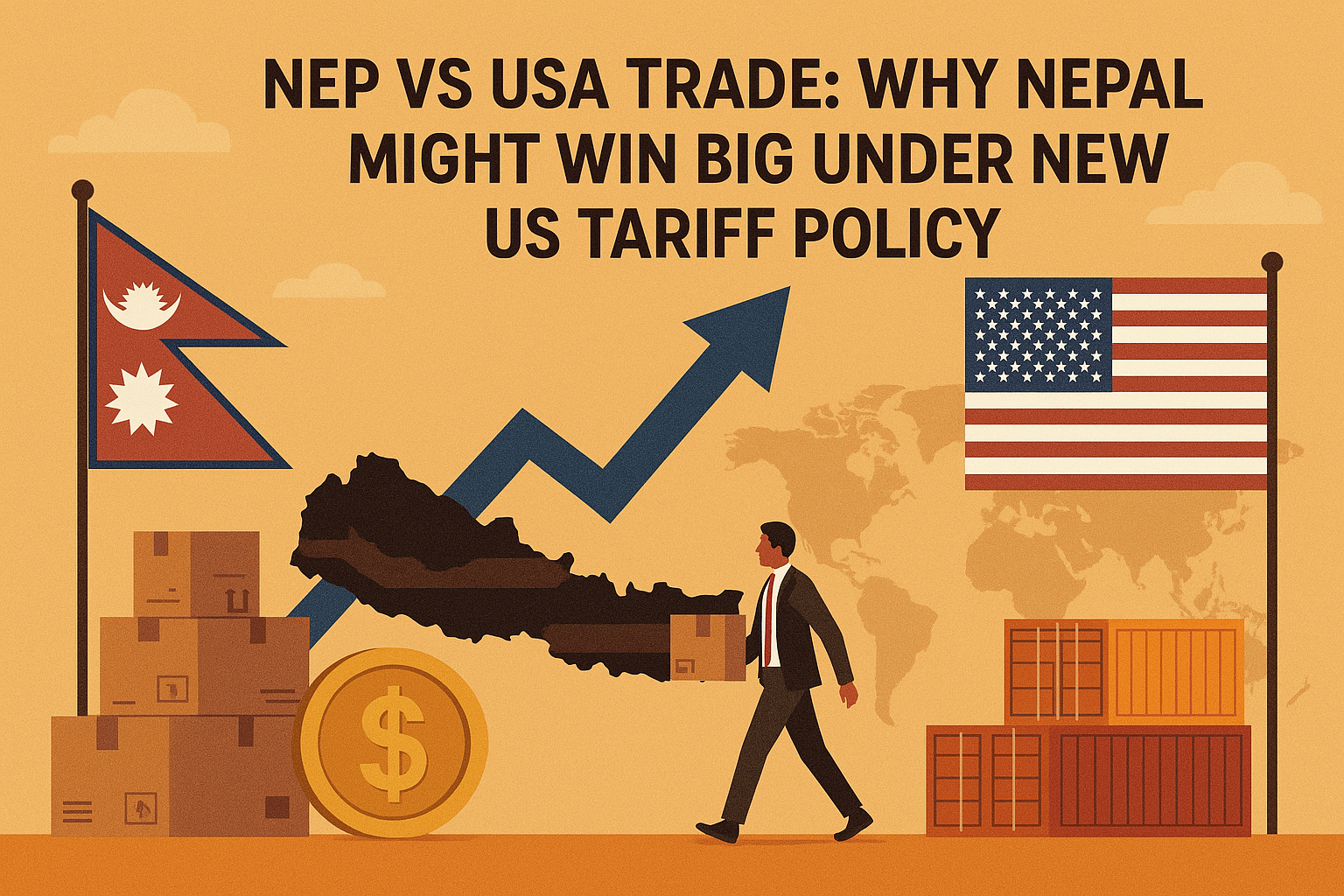
The United States dollar (USD) holds a unique and far-reaching position in the global financial system. It is the world’s dominant reserve currency, facilitates the majority of global trade transactions, and remains a benchmark for financial stability. For Nepal which is a small, import-dependent economy with limited foreign exchange earning capacity, this dominance creates significant economic exposure. While the Nepali Rupee is officially pegged to the Indian Rupee, the floating nature of the Indian currency against the dollar means Nepal’s economic indicators often move in line with shifts in USD value. Consequently, American monetary policy, global oil prices, and geopolitical developments surrounding the dollar have direct implications for Nepal’s domestic prices, trade dynamics, and fiscal health.
The demand for USD in Nepal is persistent and structural. Many essential imports such as petroleum, vehicles, medicines, electronics, and industrial inputs are either directly priced in dollars or influenced by global dollar benchmarks. Even when sourcing from India, the actual global price points of commodities are typically dollar denominated. This makes imports costlier when the dollar strengthens, amplifying inflation and deepening Nepal’s chronic trade deficit. While a stronger dollar could theoretically make Nepal’s exports cheaper in global markets, the country’s narrow export base limits these benefits. Handicrafts, tea, carpets, and pashmina, while important, are insufficient to offset the surge in import costs.
“Beyond trade, remittances form a critical backbone of Nepal’s economic resilience, contributing over a quarter of national GDP.”
Beyond trade, remittances form a critical backbone of Nepal’s economic resilience, contributing over a quarter of national GDP. These inflows, predominantly from the Gulf nations, Malaysia, and parts of East Asia, often pass through financial systems that convert local earnings into USD before being routed into Nepal. When the dollar appreciates, the value of remittances increases in Nepali Rupee terms, enhancing household income, investment in education, healthcare, and property. However, this dependence is also risky, any downturn in host economies, especially linked to US economic performance or oil demand, can slow migration and remittance flows.
The impact of the USD extends further into inflationary pressure, particularly through what economists’ term “imported inflation.” Nepal imports all its fuel and much of its medical equipment, agro-inputs, and consumer goods. Since these are dollar-priced, a rising USD inflates domestic prices. Additionally, US interest rate hikes typically trigger capital outflows from emerging markets, weakening regional currencies such as the Indian Rupee, which drags down the NPR due to the peg. The compounded effect is rising import bills, lower purchasing power, and overall economic strain for consumers and businesses alike.
Nepal’s foreign exchange reserves which is crucial for maintaining currency stability, paying for imports, and servicing debt are largely held in US dollars. As of FY 2023/24, Nepal’s reserves exceeded USD 12 billion, covering nearly 11 months of imports. While this appears healthy, managing these reserves requires caution. A rising dollar increases the rupee cost of foreign payments, forcing Nepal Rastra Bank (NRB) to intervene frequently in the market. Furthermore, in times of falling remittances or tourism revenues, these reserves must be deployed strategically to avoid economic shocks. Holding reserves in dollars also carries an opportunity cost, especially when US interest rates rise and the returns on Nepal’s reserve assets remain modest.
For individuals and families, the dollar’s influence is also deeply personal. Studying or traveling abroad becomes significantly more expensive when the dollar strengthens, as tuition fees, visa charges, and international flights are almost always dollar-based. Families are forced to exchange more rupees for the same dollar amount, making overseas education inaccessible for many. On the other hand, a weaker rupee can attract more tourists, as Nepal becomes a relatively cheaper destination in dollar terms, which in turn supports the tourism sector, a key source of foreign currency earnings.
A more structural challenge lies in foreign debt servicing. Nepal has borrowed substantially from international institutions such as the World Bank and the Asian Development Bank. As of 2024, the country’s foreign debt stood at approximately USD 11.5 billion, nearly 40% of which is dollar denominated. Any appreciation in the USD increases repayment costs in NPR terms. When revenue from exports, foreign aid, or tax collections falls short, the government faces tough choices, delay infrastructure projects, cut back on health and education budgets, or borrow more. This creates a vicious cycle of rising external debt obligations paired with declining fiscal space.
“The central Bank actively monitors dollar trends, manages the foreign exchange market, and maintains adequate liquidity in the system.”
In this context, the role of Nepal Rastra Bank becomes central. The central Bank actively monitors dollar trends, manages the foreign exchange market, and maintains adequate liquidity in the system. It has also adopted policies to incentivize remittance inflow through formal banking channels, restrict luxury imports, and diversify reserve currencies to reduce dollar dependency. Digital banking tools and foreign employment loans have been introduced to strengthen remittance flows and ease transaction costs. However, these measures, while helpful, are not sufficient without deeper structural reforms in production and exports.
Strategically, Nepal has options to better manage its relationship with the dollar. Enhancing domestic production could lower reliance on dollar-priced imports, especially in pharmaceuticals, light manufacturing, and agriculture. Promoting higher-value exports and entering premium markets could improve foreign exchange earnings. Encouraging skilled labor migration and formal remittance systems can ensure steady dollar inflows. At the trade policy level, Nepal can negotiate bilateral trade deals that settle in INR or Chinese Yuan (RMB), as done in other regional agreements, to bypass the dollar in select transactions.
Moreover, broadening the foreign exchange reserve basket to include the Euro, RMB, or Japanese Yen could reduce single-currency vulnerability. Financial tools such as forward contracts or currency swaps, though complex, could protect essential imports against exchange rate spikes. In the long term, Nepal could establish a sovereign wealth fund using surplus reserves, investing in a diversified global portfolio to safeguard national savings and reduce dollar dependency. These ideas, once considered applicable only to larger economies, may now be essential tools for macroeconomic resilience.
Ultimately, Nepal cannot escape the dollar’s dominance, but it can manage its influence. By strengthening domestic industries, diversifying exports, and enhancing financial tools and policy coordination, the country can transform vulnerability into strategic flexibility. In an interconnected world, the challenge for Nepal is not to retreat from global currency systems, but to engage them wisely and with foresight, resilience, and informed policy choices. Managing the dollar’s impact is not merely a fiscal issue; it is a question of economic sovereignty and long-term national development.
2025-07-30 18:09PM