

UNFPA, WHO, Norway, and Switzerland Partner to Advance Health Services and Combat Gender-Based Violence in Nepal

2026-08-19 17:47PM

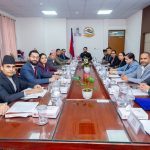
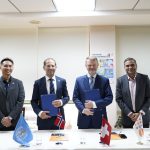
KATHMANDU, Nepal — With financial support from the Royal Norwegian Embassy and the Swiss Agency for Development and Cooperation (SDC), the United Nations Population Fund (UNFPA) and the World Health Organization (WHO) have launched a new initiative today to advance the rights, health, and well-being of women, girls, adolescents, and marginalized communities across three provinces in Nepal. Building on lessons learned and experiences from previous programmes, the initiative brings together the partners’ respective resources, expertise, and experience to strengthen essential health services and gender-based violence response.
Supported by a USD 6 million commitment, the new two-year joint programme, titled “Strengthening Systems for Integrated Sexual and Reproductive Health and Rights (SRHR) and Gender-Based Violence (GBV) Services,” will be implemented in 20 municipalities in Koshi, Madhesh, and Sudurpaschim provinces.
The initiative focuses on converting policy into everyday practice by strengthening the capacity of federal, provincial, and local authorities to deliver high-quality SRHR and GBV services. Beyond improving health and protection services, the programme will drive community awareness so that individuals know where and how to seek help.
“At a time when we are witnessing a troubling backlash against the rights of women, girls and other marginalized groups in many parts of the world, Norway remains committed to advancing gender equality. We are proud to continue our long-term investment in Nepal towards ensuring that everyone can make informed decisions about their own bodies and futures, access quality services without discrimination, and live free from violence. Norway is especially pleased that strengthened government ownership and institutional capacity are at the heart of this joint initiative,” said Mr. Baard Hjelde, Head of Cooperation and Deputy Head of Mission, Royal Norwegian Embassy in Kathmandu.
“Quality services for survivors of gender-based violence and sexual and reproductive health must be available to everyone who needs them. Switzerland remains committed to supporting federal, provincial, and local governments to strengthen systems, secure long-term support, and ensure these essential services continue to reach communities across Nepal,” said Mr. Matthias Meier, Chargé d’affaires a.i., Embassy of Switzerland in Nepal.
This initiative builds directly on over a decade of development cooperation in Nepal under the SDC and RNE supported Gender-Based Violence Prevention and Response (GBVPR) project spanning Phase I (2016–2020) and Phase II (2020–2026) and the RNE supported Reproductive Health and Rights for Accelerating Impacts (RHEA) project (2022–2025).
While previous efforts successfully established local government policies and introduced inclusive health standards, the new partnership focuses on closing the gap between laws and implementation. By uniting these gains into a more integrated approach to service delivery, the programme supports the Government of Nepal’s efforts to institutionalize integrated services, enhance domestic financing, and transition toward increasingly sustainable and nationally owned systems.
“Nepal has made important progress in establishing progressive policies and frameworks on sexual and reproductive health and rights and gender-based violence. The challenge now is to ensure that these commitments translate into quality services that people can actually access. This partnership is about helping close that gap, so that every woman and girl, wherever she lives, can exercise her rights and access the care and support she needs,” said Mr. Sriram Haridass, Country Representative, UNFPA in Nepal.
“WHO is grateful to Norway and Switzerland for standing behind gender equality and sexual and reproductive health in Nepal. WHO and UNFPA bring complementary strengths to this work, and together under the leadership of the Government of Nepal, we will work to strengthen health system capacity, refine clinical standards and support health workers to deliver integrated, quality care. Our shared aim is that every woman and girl in Nepal receives the care she needs, wherever she lives,” said Dr Allison Gocotano, Acting WHO Representative to Nepal.
By pairing UNFPA’s expertise in reproductive rights and GBV response with WHO’s technical leadership in health systems and quality standards, this joint programme offers the Government of Nepal a coherent, complementary approach to integrated care. Together, the four partners remain committed to working with the Government of Nepal to strengthen government-led systems so that every woman, girl, and young person can exercise their rights and live free from violence.
2026-08-19 17:47PM